When Gold and Bitcoin Agree That Trust Is Broken
Bitcoin at $125,000 (BTC-USD) and gold near $3,950/oz (XAU/USD) now move in lockstep, signaling not greed but distrust. As both rise, frontier currencies like USD/ZAR, USD/NGN, and USD/KES weaken, showing the world is quietly diversifying out of promises.

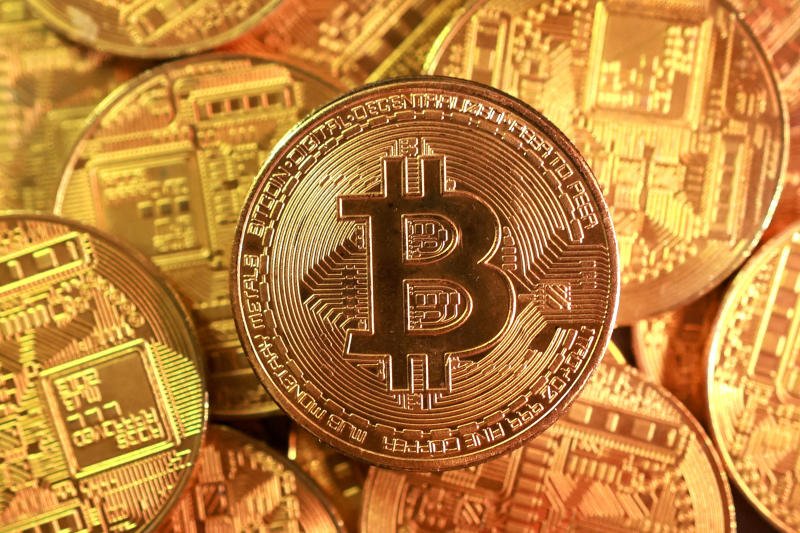
When Bitcoin crossed USD 125,000 (BTC-USD) and gold edged toward USD 3,950 per ounce (XAU/USD), it marked more than twin rallies in speculative and safe assets. It signaled a global loss of faith in the traditional anchors of value. For the first time in years, the old metal and the digital code are moving in the same direction — a shared expression of mistrust in central banks, governments, and balance sheets. Their convergence is less a coincidence than a referendum on the credibility of modern money.
The immediate spark is familiar. The protracted U.S. government shutdown has frozen key economic data and left traders flying blind. With the Dollar Index (DXY) stuck above 105.8 and U.S. 10-year yields (US10Y: ^TNX) hovering near 4.35 percent, markets are trading without the usual compass of data and policy guidance. When the normal signals vanish, investors build new ones — and gold and Bitcoin have become those signals, pricing uncertainty in real time.
Their alignment breaks an old pattern. Bitcoin’s speculative cycles have historically diverged from gold’s slow, defensive climb. Yet the rolling 90-day correlation between the two has risen above 0.6, the strongest since 2021. The link is psychological more than mechanical: money is flowing not toward yield but toward independence — assets that cannot be frozen, inflated, or censored by politics. Bitcoin embodies mathematical scarcity; gold represents geological permanence. Together, they have become a barometer for trust when policy coherence collapses.
Liquidity flows confirm the shift. Over the past month, global gold ETFs have absorbed about USD 4.5 billion, while spot Bitcoin ETFs added USD 3.8 billion — an unusually close 1:1 ratio. Institutional portfolios are no longer choosing between metal and code; they are holding both. That dual allocation is draining capital from frontier-market bonds, equities, and currencies. As investors retreat to perceived safety, the rand (USD/ZAR ≈ 18.9), naira (USD/NGN ≈ 1,610), and shilling (USD/KES ≈ 129.4) have all weakened, while African Eurobond spreads have widened by 30–50 basis points. The rotation is psychological, not mechanical — fear moves faster than liquidity.
For frontier policymakers, this convergence turns a currency challenge into a macro trap. South Africa, Nigeria, and Kenya maintain policy rates of 8.25 percent, 18.75 percent, and 13 percent respectively — levels meant to anchor inflation but now competing with assets that yield nothing and still rise. Central banks face a narrowing policy corridor: defending currencies risks choking credit, while easing liquidity risks deeper depreciation. Each round of safe-haven inflows abroad makes domestic liquidity scarcer and the cost of credit steeper at home.
Despite their synchronized climb, gold and Bitcoin are powered by opposite fundamentals. Gold’s supply is geological: output has stagnated this year amid extraction costs near USD 1,650/oz, setting a durable floor. Bitcoin’s supply is algorithmic: its issuance will halve in 2026 from 900 to 450 BTC per day, mechanically tightening availability. Yet both assets now behave alike — duration-free stores of value reacting less to growth and more to distrust. The more policymakers talk about fiscal prudence, the less investors seem to believe it.
That skepticism is hitting African markets in real time. South African miners such as Harmony Gold (JSE: HAR) and Gold Fields (JSE: GFI) have rallied 6 and 7 percent respectively, even as the FTSE/JSE All Share (JALSH: ^J203) remains flat. Investors are buying the metal, not the economy. Nigeria and Ghana, net importers of bullion, face the inverse: higher gold prices inflate import bills, while rising crypto participation diverts scarce foreign exchange into decentralized networks. In Kenya, blockchain transactions exceed USD 120 million per month; in Nigeria, peer-to-peer crypto flows now account for nearly 40 percent of informal cross-border payments. Each crypto surge tightens liquidity twice — first through costlier imports, then through capital migration into non-sovereign assets.
For global investors, this dual rally sends a unified signal. When both Bitcoin and gold rise while real yields stagnate, risk aversion is spreading. When Bitcoin outpaces gold, liquidity is speculative; when gold leads, liquidity is defensive. Today’s near-lockstep climb blurs that distinction, suggesting structural distrust rather than tactical positioning. Option markets echo that mood: implied call-volatility skews stand near +8 percent for gold and +12 percent for Bitcoin, showing traders are paying for upside protection across asset classes — a mark of anxiety, not euphoria.
Data also reveal a behavioral chain. Each combined one-percent gain in gold and Bitcoin historically coincides with roughly a 0.2 percent depreciation in frontier-currency baskets and about a 15-basis-point widening in sovereign spreads within weeks. The link is not causal but psychological — the same fear that drives investors into safe havens pulls liquidity out of emerging risk.
That convergence leaves African policymakers confronting a new kind of symmetry. Commodity exporters may enjoy temporary windfalls from higher metal revenues, but financial channels tell another story: capital is exiting faster than trade income can compensate. For import-dependent economies, the twin rallies bring double pain — raising external borrowing costs and stoking domestic inflation expectations. Every spike in Bitcoin and gold now compresses Africa’s monetary space more than any single Fed move.
The deeper meaning transcends regions. Gold and Bitcoin have become a shared global language of mistrust. Investors from São Paulo to Nairobi are diversifying not for yield, but for credibility. The question is no longer whether crypto belongs in portfolios — it’s whether fiat systems can remain credible without it. A swift resolution of the U.S. fiscal standoff could cool the rally, yet the structural shift is already entrenched. Central banks are diversifying reserves into bullion, and private funds are building digital hedges. The symmetry between metal and algorithm reflects one truth: the world is diversifying out of promises and into scarcity.
As both assets hover near record highs, their message is unmistakable. Markets are no longer seeking profit; they are seeking permanence. Gold’s weight and Bitcoin’s code have become twin pillars of a new monetary psychology — one forged in distrust, sustained by scarcity, and priced in real time through every weakening frontier currency.