Equatorial Guinea’s 23.5 Percent Youth Unemployment Tests AfDB’s Human Capital Bet
AfDB approves €73.27m for Equatorial Guinea to cut 23.5% youth joblessness, build polytechnics, and back 500 firms. With Brent (ICE: LCOc1) near USD 88 and debt at 42% of GDP, success could shift a petro-state toward inclusive growth.
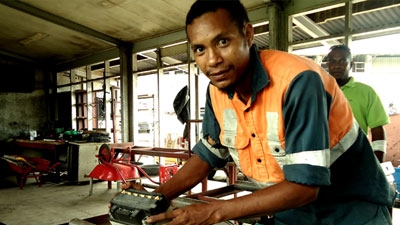
The African Development Bank’s approval of a €73.27 million loan for Equatorial Guinea is more than just another financing agreement; it is a test of whether human capital investment can redirect a resource-dependent economy. The Human Capital Development Project in Support of Economic and Social Inclusion (PARCH 1), running from 2025 to 2030, will establish two provincial polytechnic institutes in Bioko Sur and Welé-Nzas. These facilities are expected to deliver market-oriented training in agriculture, fisheries, tourism, ICT, and public works, with curricula designed in collaboration with private firms. According to AfDB projections, the program could create 4,500 jobs, support 500 small enterprises, and provide training or placement for nearly 2,000 youth and women.
The urgency is obvious. Youth unemployment is 23.5 percent nationally and 26.7 percent for women, while 16.5 percent of young people are classified as NEET — not in employment, education, or training. Less than 2 percent of budgetary resources go to technical and vocational education, leaving a system with weak curricula, poor certification standards, and low credibility with employers. For a country of just 1.7 million, with GDP per capita above USD 7,000, this is a structural imbalance: one of Africa’s highest income levels paired with some of its most underdeveloped human capital systems.
This loan nearly doubles the AfDB’s active portfolio in Equatorial Guinea, which stood at €85 million in August 2025, with 65 percent focused on agriculture and fisheries, 34 percent on governance, and barely 1 percent each on ICT and energy. Adding €73 million shifts priorities toward inclusion and skills, signaling a move away from extractives and governance-heavy lending toward people-focused growth. By comparison, AfDB’s total approvals across Africa exceeded USD 10 billion in 2024, meaning Equatorial Guinea’s allocation is small regionally but highly concentrated for a country of its size.
If targets are met, the impact will be meaningful. Reducing youth unemployment by three percentage points, creating 500 new businesses, and training 1,935 people in five years could shift local economic patterns. But delivery is not guaranteed. Building two polytechnics, designing curricula, and securing qualified instructors in such a short period is a challenge. Beyond infrastructure, success depends on tight employer linkages, internships, mentoring programs, and access to finance for startups. Without these, the risk is familiar: graduates with certificates but few jobs, and small firms struggling to survive.
The macroeconomic context raises both opportunities and risks. Equatorial Guinea grew 2.8 percent in 2024 and is projected by the IMF to expand by 3.5 percent in 2025, modest compared to regional peers. Oil still provides over 60 percent of fiscal revenue and 90 percent of exports, with Brent crude (ICE: LCOc1) trading near USD 88 per barrel. Sovereign debt is about 42 percent of GDP, manageable but sensitive to oil price swings. AfDB’s intervention provides a hedge against this volatility by targeting sectors such as fisheries, agro-processing, and tourism that can diversify export earnings.
For global investors, the loan is a test of development finance leverage. If €73 million translates into thousands of jobs and hundreds of enterprises, it strengthens the case for scaling similar models elsewhere. It also affects investor perception: oil majors with assets offshore (NYSE: XOM, LSE: SHEL, NYSE: CVX) may view stronger human capital as a stabilizer of political and social risk. For ESG funds, quantifiable outcomes — 4,500 jobs, 500 firms — provide measurable impact benchmarks.
Geopolitically, the project could reposition Equatorial Guinea in development circles. Long seen as a hydrocarbon enclave with weak governance, the country could demonstrate that targeted, inclusive investments are possible even in resource-heavy states. That would attract attention from other partners — the EU, Gulf sovereign funds, and China — which are active in vocational training and infrastructure across Africa. Failure, however, would reinforce skepticism about absorptive capacity and the effectiveness of human capital projects in small petro-states.
For Malabo, credibility will hinge on inclusivity. Locating polytechnics in Bioko Sur and Welé-Nzas ensures regional spread, but outcomes must be balanced across provinces and genders. Given higher female unemployment, deliberate policies to support women-led enterprises are vital. Without this, the program risks replicating existing inequalities rather than addressing them.
The AfDB’s €73 million is modest compared with global finance but significant locally. It marks a deliberate pivot from resource-led to people-led development, embedding private-sector alignment in the design. Whether that pivot becomes a sustained shift depends on political will, execution discipline, and employer buy-in. If successful, PARCH 1 could show that even a small oil-dependent state can leverage development finance to transform youth employment outcomes and diversify its economic base. If not, it will underline the hard truth that without systemic reform, even well-designed projects risk becoming missed opportunities in Africa’s long struggle to turn natural wealth into broad-based prosperity.